🧪 Chemistry Study Planner
Find out how many days you need to finish your 9th Class Chemistry Notes 2026 before your exam.
Adjust the numbers anytime as your revision speed changes.

If you're searching for reliable 9th Class Chemistry Notes 2026, I know how confusing this subject can feel with all its formulas, reactions, and periodic table rules.
I've guided many students through Chemistry over the years, and in my experience, the ones who struggle most are the ones trying to memorize reactions without understanding the underlying logic first. This guide breaks everything down chapter by chapter, the way it should actually be studied — not just another PDF dump.
📖 Why Chapter-Wise Chemistry Notes Actually Matter
Chemistry builds concept on top of concept, much like Physics, so skipping around chapters usually backfires later.
That's exactly why good 9th Class Chemistry Notes 2026 are organized in the same order as the official Punjab Textbook Board syllabus. Most people make this mistake — they jump straight to memorizing chemical equations without understanding atomic structure first, and it costs them marks when questions combine multiple concepts.
📋 Complete 9th Class Chemistry Chapter List (Punjab Board)
Here's the full chapter breakdown covered in the 9th Class Chemistry Notes 2026, based on the current Punjab syllabus:
- Chapter 1: Fundamentals of Chemistry
- Chapter 2: Structure of Atoms
- Chapter 3: Periodic Table and Periodicity of Properties
- Chapter 4: Structure of Molecules
- Chapter 5: Physical States of Matter
- Chapter 6: Solutions
- Chapter 7: Electrochemistry
- Chapter 8: Chemical Reactivity
In my experience, students who study these chapters in this exact order build a much stronger base for 10th class Chemistry too, since almost every later chapter depends on atomic structure and the periodic table covered early on.
📊 How Marks Are Actually Distributed Across the Paper
This is something most guess papers and PDF notes never explain clearly, and it genuinely changes how you should plan your study time.
The 9th Class Chemistry paper is typically split into three sections — objective (MCQs), short questions, and long questions — and each chapter doesn't carry equal weight across these sections.
Chapters 1, 2, and 3 usually dominate the objective section, since definitions and periodic trends translate easily into single-line MCQs. Chapters 4 through 6 carry a heavier share of short questions, especially anything involving diagrams or comparisons between concepts. Chapters 7 and 8 tend to appear more in long questions, since electrochemistry and reactivity naturally require more explanation.
🔍 A Closer Look at Each Chapter
Since most 9th Class Chemistry Notes 2026 online just dump PDFs without explaining what each chapter actually covers, here's a proper breakdown of what to expect and focus on in each one.
Chapter 1, Fundamentals of Chemistry, introduces the branches of chemistry, the concept of matter, and basic lab safety rules. It sounds simple, but exams often test the difference between physical and chemical changes here, so don't skip past it too quickly.
Chapter 2, Structure of Atoms, covers atomic models, subatomic particles, and electron configuration. This chapter forms the base for almost everything that follows, and in my experience, spending an extra day here saves time across three or four later chapters.
Chapter 3, Periodic Table and Periodicity, explains how elements are arranged and how properties like atomic radius, valency, and metallic character change across periods and groups. Memorizing the direction of each trend, rather than exact numbers, is what actually helps in exams.
Chapter 4, Structure of Molecules, focuses on chemical bonding — ionic, covalent, and coordinate bonds. Diagrams showing electron sharing or transfer are commonly asked, so practicing these visually matters more than just reading definitions.
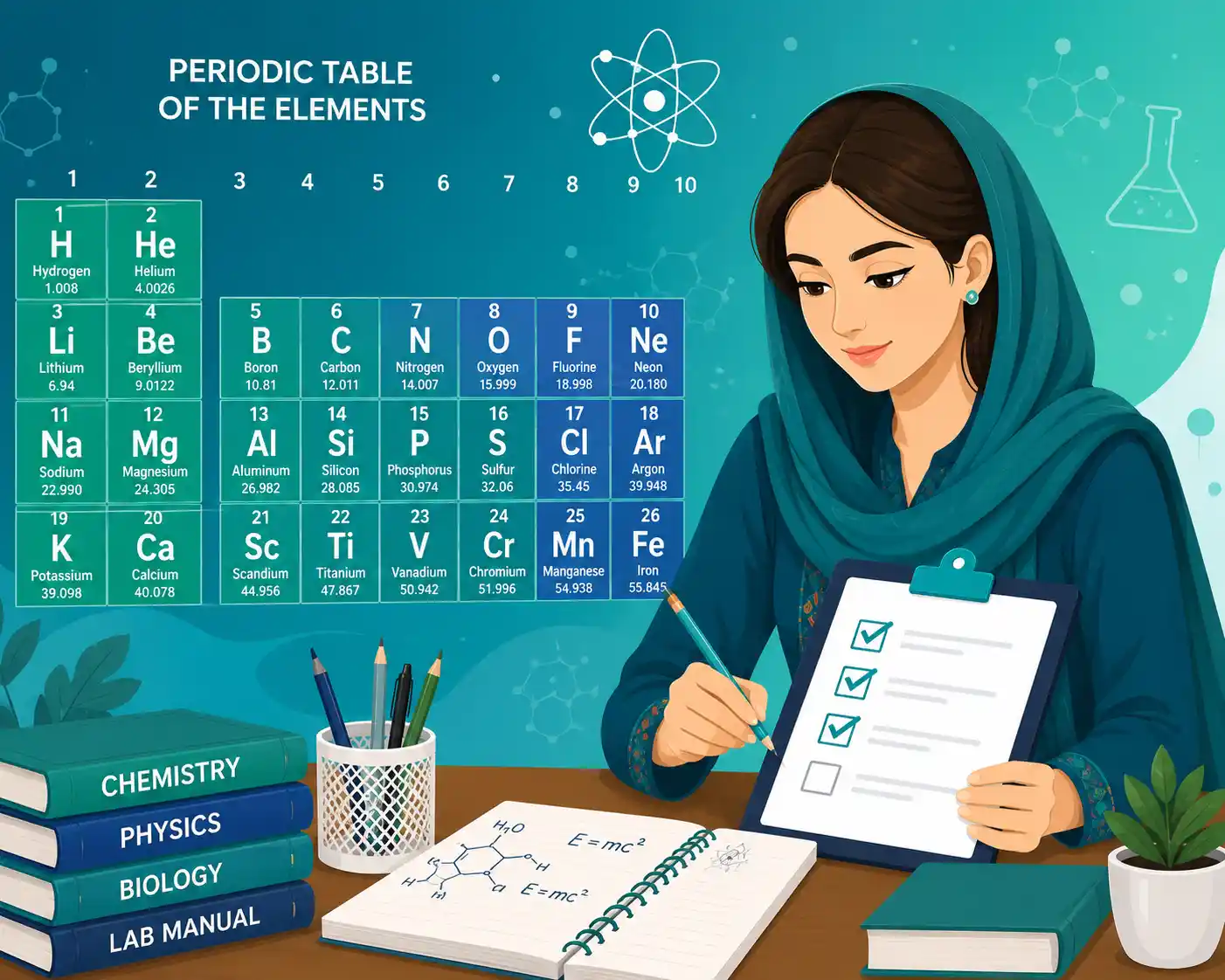
Chapter 5, Physical States of Matter, covers solids, liquids, and gases along with the gas laws. This is one of the more numerical-heavy chapters, so practicing gas law calculations specifically pays off here.
Chapter 6, Solutions, deals with concentration, solubility, and types of solutions. Numericals involving molarity and molality are common, and in my experience, this chapter is often underprepared simply because students run out of time before reaching it.
Chapter 7, Electrochemistry, introduces oxidation-reduction reactions and electrochemical cells. This chapter connects concepts from Chapters 2 and 4, so a shaky foundation earlier makes this chapter feel much harder than it needs to be.
Chapter 8, Chemical Reactivity, covers reactivity series and different types of chemical reactions. Long questions here often ask you to explain and classify reactions, so understanding the reasoning behind each reaction type matters more than memorizing examples.
Once your Chemistry preparation is on track, it's also worth checking how your overall 9th Class Result 2026 gets calculated, so you understand exactly how each subject contributes to your final grade.
📈 What Previous Papers Reveal About Repeated Patterns
Most students never actually look back at multiple years of past papers side by side, but doing this reveals patterns that guess papers alone often miss.
Across recent years, definition-based short questions from Chapters 1, 2, and 3 appear almost every single year without fail, which is exactly why these early chapters deserve serious attention even though they feel "easy" compared to later ones.
Long questions asking students to explain and balance chemical equations from Chapter 8 also appear consistently, often paired with a related short question from Chapter 7 on oxidation states, since examiners like testing connected concepts together. In my experience, numerical-heavy long questions from Chapters 5 and 6 show up in most years too, but with different specific values each time, meaning the method matters far more than memorizing any single solved example.
🔢 Common Valencies Worth Memorizing Early
Elements like hydrogen, oxygen, and nitrogen carry fixed valencies that appear in almost every formula-writing question, while metals like iron and copper carry variable valencies that students often forget to check before writing a formula. In my experience, students who memorize the ten to twelve most common valencies in the first week of preparation move through Chapters 4 and 8 noticeably faster.
My advice is to write these valencies on a single small card and review it for two minutes daily until it becomes automatic, rather than trying to memorize a long list all at once.
🧠 Memory Techniques That Actually Work for Chemistry
Chemistry involves a lot of terminology, and rote memorization alone tends to fail under exam pressure.
For the periodic table, associating each group with a simple story or pattern works better than memorizing numbers in isolation — for example, linking group 1 elements to their shared property of being highly reactive with water, rather than just their names in order.
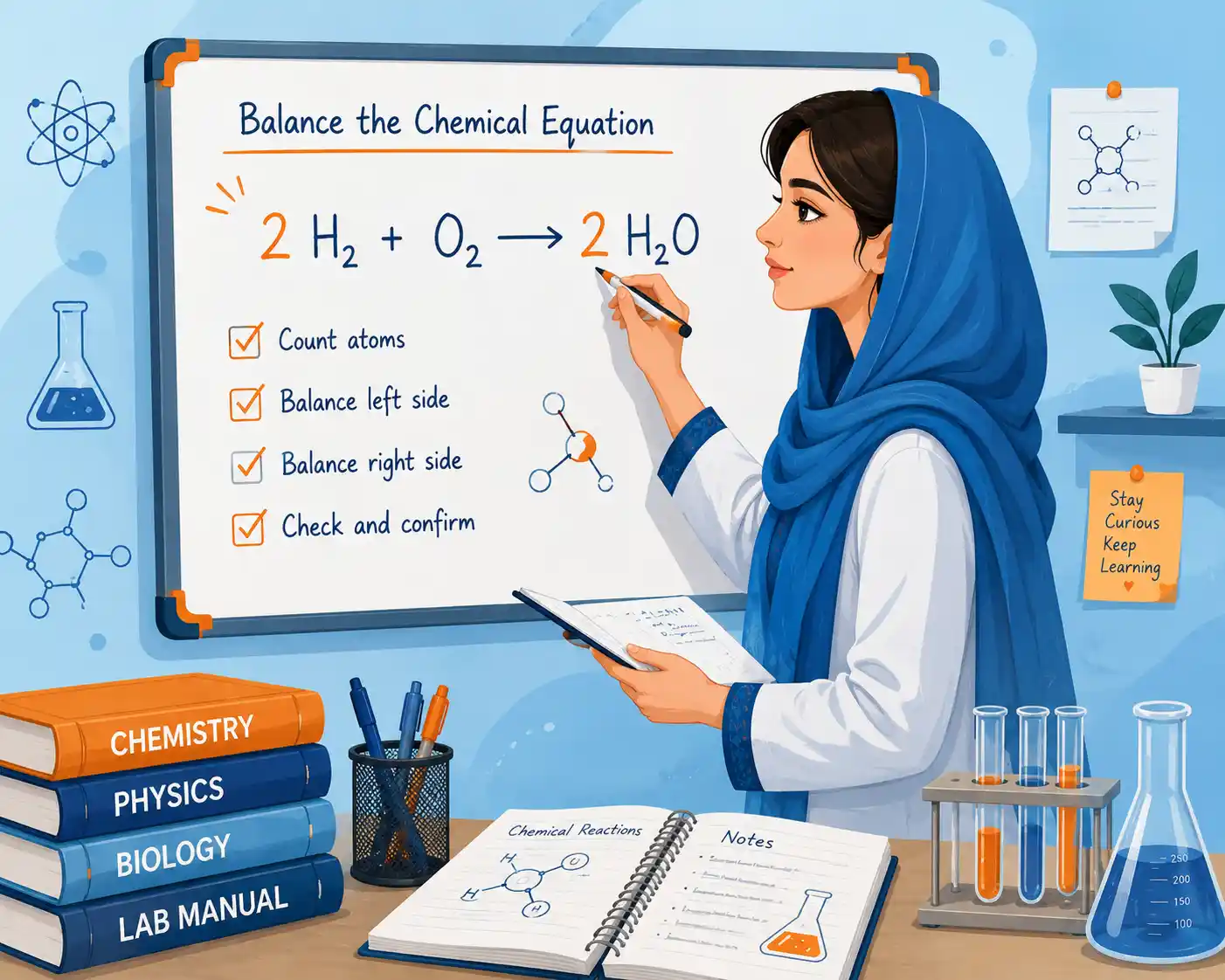
For chemical equations, understanding the logic of why atoms rearrange during a reaction makes the equation far easier to reconstruct from memory, compared to memorizing it as a fixed sequence of symbols. For definitions, rewriting them in your own simple words, rather than copying them exactly from the textbook, actually helps you recall the meaning under exam pressure.
Real situation: I've worked with students who initially struggled with Chemistry purely because they were memorizing everything as isolated facts. Once they started connecting concepts logically, their retention improved dramatically within just a few weeks.
🥽 Basic Lab Safety Awareness for Chemistry Students
Even though 9th class Chemistry is mostly theory-focused for exams, understanding basic lab safety concepts is still tested in Chapter 1 and genuinely useful if your school includes practical sessions.
Always assume unknown chemicals could be hazardous until confirmed otherwise, and avoid direct contact or smelling chemicals directly, since proper lab technique involves wafting fumes gently toward yourself instead. Understanding basic hazard symbols, like flammable, corrosive, and toxic warning signs, is a small but often-tested detail that many students overlook.
🎯 Exam Day Strategy Specific to Chemistry
When attempting the objective section, answer definition-based MCQs first, since these take the least time and build confidence before tackling trickier periodic table or numerical-based MCQs.
For short questions, attempt the ones involving direct definitions or simple comparisons before moving to diagram-based questions. For long questions, write balanced equations clearly and leave a small gap after each major step, since examiners often award partial marks for correct method even if the final answer has a small error.
📅 Building a Realistic Weekly Study Rhythm
Dedicating even three to four short sessions per week, focused on one chapter's definitions, one set of numericals, and one diagram, keeps concepts fresh without requiring long study marathons that are hard to sustain.
My advice is to review your valency chart and one balanced equation every single day, even on days you're not formally studying Chemistry, since this tiny daily habit prevents the forgetting curve that affects most students between study sessions.
🚀 Why This Subject Matters Beyond the Exam
Medical, pharmacy, and engineering programs all build directly on the atomic structure, bonding, and reaction concepts introduced in these eight chapters, so a shaky foundation now often resurfaces as a bigger struggle in 11th and 12th grade Chemistry.
Even government science and technical roles, like the ones available through organizations such as PAEC, often value candidates with strong basic science understanding from their academic record, not just their final degree.
Real situation: I've spoken with students who regretted rushing through 9th class Chemistry only to struggle significantly with the same core concepts two years later in a much harder format. Treating this year as foundation-building, rather than just exam-passing, pays off far beyond this one result.
📄 Where to Get the Official Syllabus
Before finalizing your preparation, confirm the official curriculum and approved textbooks on the Punjab Curriculum and Textbook Board website, so you're always studying from the correct, updated content.
❌ Common Mistakes Students Make
- Skipping definitions — short-question sections rely heavily on precise wording.
- Ignoring mole/molar mass numericals — these appear across multiple chapters.
- Skipping diagrams — labeling questions are common, easy marks when practiced.
- Ignoring oxidation/reduction basics — makes later chapters feel far more confusing.
✅ My Final Advice
I've guided many students through their 9th Class Chemistry Notes 2026 preparation, and the pattern is always the same — those who study consistently, chapter by chapter, score far better than those who rush everything in the final week. Chemistry rewards understanding over memorization more than most subjects.
❓ FAQs — 9th Class Chemistry Notes 2026
Q1: How many chapters are in 9th Class Chemistry for Punjab boards?
There are 8 chapters, starting from Fundamentals of Chemistry and ending with Chemical Reactivity.
Q2: Which chapter should I start with?
Always start with Chapter 1, since it introduces basic terminology used throughout every later chapter.
Q3: How important are numerical problems in Chemistry?
Very important — mole and molar mass calculations appear across multiple chapters and carry consistent marks.
Q4: Are these notes enough, or do I need extra practice material?
Well-structured notes cover core concepts well, but extra numericals and diagram practice reinforce weak areas.
Q5: Which chapters are most important for exams?
Structure of Atoms, Periodic Table, and Electrochemistry usually carry the most conceptual and numerical questions.
Q6: How can I get better at balancing chemical equations quickly?
Practice ten different equations by hand every week, focusing on counting atoms rather than guessing coefficients.
Q7: Should I memorize the entire periodic table?
Not the entire table — focus on the first twenty elements and general trends for atomic size, valency, and reactivity.
Q8: How is the Chemistry paper usually split between MCQs, short, and long questions?
It's typically divided into objective, short, and long-question sections, with Chapters 1–3 weighted more toward objective and Chapters 7–8 toward long questions.
Q9: Is it worth reviewing past papers from multiple years?
Yes, reviewing three to four years side by side reveals which chapters repeat most often — often more useful than a single guess paper.
Q10: How can I avoid forgetting Chemistry concepts between study sessions?
Reviewing your valency chart and one balanced equation daily, even briefly, prevents the natural forgetting curve between longer study sessions.
📢 Get More Study Notes & Result Updates!
Join our free community and stay ahead with the latest updates.